Saturday, November 23, 2013

Riot Police

 Riot Police


Riot police are police who are organised, deployed, trained or equipped to confront crowds, protests or riots.

Riot police may be regular police who act in the role of riot police in particular situations or they may be separate units organised within or in parallel to regular police forces. Riot police are used in a variety of different situations and for a variety of different purposes. They may be employed to control riots as their name suggests, to disperse or control crowds, to maintain public order or discourage criminality, to protect people or property, to function as a tool of political repression by breaking up protests and suppressing dissent or civil disobedience.
Riot gear

Riot police often use special equipment termed riot gear to help protect themselves and attack others. Riot gear typically includes personal armor, batons, riot shields and riot helmets. Many riot police teams also deploy specialized less-than-lethal weapons, such as pepper spray, tear gas, rifles that fire rubber bullets, stun grenades, and Long Range Acoustic Devices.
List of riot police organizations

  •     Australia - Public Order and Riot Squad
  •     Bulgaria - National Gendarmerie Service
  •     France - Compagnies Républicaines de Sécurité Escadrons de Gendarmerie Mobile
  •     Germany - Bereitschaftspolizei
  •     Greece - Units for the Reinstatement of Order
  •     India - Rapid Action Force
  •     Ireland - Garda Public Order Unit
  •     Israel - Yasam
  •     Malaysia - Federal Reserve Unit
  •     Romania - Romanian Gendarmerie
  •     Russia - OMON
  •     Spain - Unidad de Intervención Policial
  •     Singapore - Police Tactical Unit (Singapore)
  •     Turkey - Çevik Kuvvet
  •     Ukraine - Berkut (Ukraine)

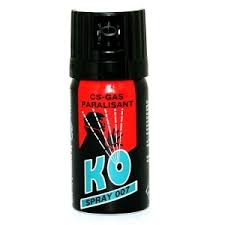
Police CS-GAS

CS-GAS


The compound 2-chlorobenzalmalononitrile (also called o-chlorobenzylidene malononitrile) (chemical formula: C10H5ClN2), a cyanocarbon, is the defining component of a tear gas commonly referred to as CS gas, which is used as a riot control agent. CS gas is an aerosol of a volatile solvent (a substance that dissolves other active substances and that easily evaporates) and 2-chlorobenzalmalononitrile, which is a solid compound at room temperature. CS gas is generally accepted as being non-lethal. It was discovered by two Americans, Ben Corson and Roger Stoughton, at Middlebury College in 1928, and the chemical's name is derived from the first letters of the scientists' surnames.

CS was developed and tested secretly at Porton Down in Wiltshire, England, in the 1950s and 1960s. CS was used first on animals, then subsequently on British Army servicemen volunteers. CS has less effect on animals due to "under-developed tear-ducts and protection by fur".

Production


CS is synthesized by the reaction of 2-chlorobenzaldehyde and malononitrile via the Knoevenagel condensation: CS-chemical-synthesis


        ClC6H4CHO + H2C(CN)2 → ClC6H4CHC(CN)2 + H2O

The reaction is catalysed with weak base like piperidine or pyridine. The production method has not changed since the substance was discovered by Corson and Stoughton.[7] Other bases, solvent free methods and microwave promotion have been suggested to improve the production of the substance.

The physiological properties had been discovered already by the chemists first synthesising the compound in 1928: "Physiological Properties. Certain of these dinitriles have the effect of sneeze and tear gases. They are harmless when wet but to handle the dry powder is disastrous."
Use as an aerosol

As 2-chlorobenzalmalononitrile is a solid at room temperature, not a gas, a variety of techniques have been used to make this solid usable as an aerosol:

    Melted and sprayed in the molten form.
    Dissolved in organic solvent.
    CS2 dry powder (CS2 is a siliconized, micro-pulverized form of CS).
    CS from thermal grenades by generation of hot gases.

In the Waco Siege, CS was dissolved in the organic solvent dichloromethane (also known as methylene chloride). The solution was dispersed as an aerosol via explosive force and when the highly volatile dichloromethane evaporated, CS crystals precipitated and formed a fine dispersion in the air.

Effects

CS Gas used at May Day 2013, Istanbul
Tear gas shells used in Istanbul in 2013
CS gas shells used in Taksim Gezi Park, Istanbul, May 2013

Many types of tear gas and other riot control agents have been produced with effects ranging from mild tearing of the eyes to immediate vomiting and prostration. CN and CS are the most widely used and known, but around 15 different types of tear gas have been developed worldwide e.g., adamsite or bromoacetone, CNB, and CNC. CS has become the most popular due to its strong effect and lack of toxicity in comparison with other similar chemical agents. The effect of CS on a person will depend on whether it is packaged as a solution or used as an aerosol. The size of solution droplets and the size of the CS particulates after evaporation are factors determining its effect on the human body.[9]

The chemical reacts with moisture on the skin and in the eyes, causing a burning sensation and the immediate forceful and uncontrollable shutting of the eyes. Effects usually include tears streaming from the eyes, profuse coughing, exceptional nasal discharge that is full of mucus, burning in the eyes, eyelids, nose and throat areas, disorientation, dizziness and restricted breathing. It will also burn the skin where sweaty and/or sunburned. In highly concentrated doses it can also induce severe coughing and vomiting. Almost all of the immediate effects wear off within an hour (such as exceptional nasal discharge and profuse coughing), although the feeling of burning and highly irritated skin may persist for hours. Affected clothing will need to be washed several times or thrown away.


Secondary effects


People or objects contaminated with CS gas can cause secondary exposure to others, including healthcare professionals and police. In addition, repeated exposure may cause sensitisation.

Toxicity


Although described as a non-lethal weapon for crowd control, many studies have raised doubts about this classification. As well as creating severe pulmonary damage, CS can also significantly damage the heart and liver.
On 28 September 2000, Prof. Dr. Uwe Heinrich released a study commissioned by John C. Danforth, of the United States Office of Special Counsel, to investigate the use of CS by the FBI at the Branch Davidians' Mount Carmel compound. He concluded that the lethality of CS used would have been determined mainly by two factors: whether gas masks were used and whether the occupants were trapped in a room. He suggests that if no gas masks were used and the occupants were trapped, then, "...there is a distinct possibility that this kind of CS exposure can significantly contribute to or even cause lethal effects."
Many reports have associated CS exposure with miscarriages. This is consistent with its reported clastogenic effect (abnormal chromosome change) on mammalian cells.

When CS is metabolised, cyanide can be detected in human tissue.According to the United States Army Center for Health Promotion and Preventive Medicine, CS emits "very toxic fumes" when heated to decomposition, and at specified concentrations CS gas is an immediate danger to life and health. They also state that those exposed to CS gas should seek medical attention immediately.[2]

In Israel, CS gas was reported to be the cause of death of Jawaher Abu Rahmah on 31 December 2010, although the Israel Defense Forces have questioned the veracity of the report. In Egypt, CS gas was reported to be the cause of death of several protesters in Mohamed Mahmoud Street near Tahrir square during the November 2011 protests.

The solvent in which CS is dissolved, methyl isobutyl ketone (MIBK), is classified as harmful by inhalation; irritating to the eyes and respiratory system; and repeated exposure may cause skin dryness or cracking.


Use


RWGŁ-3 Polish tear gas grenade launcher.
CS was used to flush the Viet Cong from their tunnels in the Vietnam.

CS is used in spray form by many police forces as a temporary incapacitant and to subdue attackers or persons who are violently aggressive. Officers who are trained in the use and application of CS spray are routinely exposed to it as part of their training.

Blank pistol cartridges carrying CS in powder form have been released to the public. These, when fired at relatively close ranges, fully expose the target to the effects of CS, and are employed as a potent defensive weapon in regions where blank firing pistols are legally permitted for such use.[citation needed]

Although predominantly used by police it has also been used in criminal attacks in various countries.[15][16][17][18]

Use of CS in war is prohibited under the terms of the Chemical Weapons Convention, signed by most nations in 1993 with all but five other nations signing between 1994 and 1997. The reasoning behind the prohibition is pragmatic: use of CS by one combatant could easily trigger retaliation with much more toxic chemical weapons such as nerve agents. Only five nations have not signed the Chemical Weapons Convention and are therefore unhindered by restrictions on the use of CS gas: Angola, Egypt, North Korea, Somalia, and Syria.
Domestic police use of CS is legal in many countries, as the Chemical Weapons Convention prohibits only military use.


Police Body Armor

Body Armor

When a bullet strikes body armor, it's caught in a "web" of fibers. These fibers absorb and disperse the impact energy that is transmitted to the vest from the bullet.

Because the fibers work together both in the individual layer and with other layers of material in the vest, a large area of the garment becomes involved in preventing the bullet from penetrating. This also helps in dissipating the forces that can cause non-penetrating injuries (commonly referred to as "blunt trauma") to internal organs.
Methods of Construction

Typically, concealable body armor is constructed of multiple layers of ballistic fabric or other ballistic-resistant materials, assembled into the "ballistic panel." The ballistic panel is then inserted into the "carrier," which is constructed of fabrics such as nylon or cotton. The ballistic panel may be permanently sewn into the carrier or may be removable.

Ballistic fabric is available from a number of manufacturers in various styles and compositions, each type having unique ballistic-resistant properties. The location and number of layers of each style within the multiple-layer ballistic panel influence the overall ballistic performance of the panel.
Materials Used

Several manufacturers have been involved in developing and refining materials used in body armor.
Kevlar®

DuPont has developed law enforcement protection products for more than 25 years. Its Kevlar brand fiber, first developed in 1965, was the first material identified for use in the modern generation of concealable body armor. Kevlar is a manmade organic fiber, with a combination of properties allowing for high strength with low weight, high chemical resistance, and high cut resistance. Kevlar is also flame-resistant and does not melt, soften, or flow.

Kevlar 29, introduced in the early 1970s, was the first generation of bullet-resistant fibers developed by DuPont and helped to make the production of flexible, concealable body armor practical for the first time. In 1988, DuPont introduced the second generation of Kevlar fiber, known as Kevlar 129. According to DuPont, this fabric offered increased ballistic protection capabilities against high-energy rounds such as the 9mm FMJ. In 1995, Kevlar Correctional was introduced, which provides puncture-resistant technology to both law enforcement and correctional officers against puncture-type threats.
Spectra® Fiber


Spectra fiber, manufactured by AlliedSignal (now Honeywell), is an ultra-high-strength polyethylene fiber. Ultra-high molecular weight polyethylene is dissolved in a solvent and spun through a series of small holes, called spinnerets. This solution is solidified by cooling, and the cooled fiber has a gel-like appearance. The Spectra fiber is then used to make Spectra Shield composite. A layer of Spectra Shield composite consists of two unidirectional layers of Spectra fiber, arranged to cross each other at 0- and 90-degree angles and held in place by a flexible resin. Both the fiber and resin layers are sealed between two thin sheets of polyethylene film, which is similar in appearance to plastic food wrap. The resulting non-woven fabric is incredibly strong, lightweight and has excellent ballistic protection capabilities. Spectra Shield is made in a variety of styles for use in both concealable and hard armor applications.
Aramid Fiber

Honeywell also uses the shield technology process to manufacture another type of shield composite called GoldFlex. GoldFlex is manufactured using aramid fibers instead of the Spectra fiber.

Another manufacturer, Akzo Nobel, has developed various forms of its aramid fiber TWARON® for body armor. According to Akzo Nobel, this fiber uses 1,000 or more finely-spun single filaments that act as an energy sponge, absorbing a bullet's impact and quickly dissipating its energy through engaged and adjacent fibers. Because more filaments are used, the impact is dispersed more quickly. Akzo claims their patented microfilament technology allows maximum energy absorption at minimum weights while enhancing comfort and flexibility.
Dyneema

Another fiber used to manufacture body armor is Dyneema. Originated in the Netherlands, Dyneema has an extremely high strength-to-weight ratio (a 1-mm-diameter rope of Dyneema can bear up to a 240-kg load), and has high energy absorption characteristics.
Body Armor Facts

    Studies on officer safety suggest that 42% of officer deaths by firearms may have been prevented if the officer had been wearing concealable body armor.
    Studies also show that of those whose lives could have been saved, 94% needed torso protection from rounds delivered by low- to medium-energy handguns and .22 rimfire rifles and shotguns.
    According to a 1997 Bureau of Justice Statistics survey of 700 state and local law enforcement agencies with 100 or more officers, approximately 40% of sheriff's and municipal police departments, and 25% of state and country police departments require all field officers to wear body armor, compared to slightly less than 30% in the same survey conducted in 1993.
    From 1973 to 2000, a total of 2,500 "saves" have been attributed to the use of body armor.

The top five threats regularly faced by police officers are:

    Blunt trauma
    Knives
    Hypodermic needles
    Pointed and handmade weapons
    Bullets

Ballistic Standards

This would be short body copy that would link to the full story. When they click on this copy it will take them to a differrent page that will contain all the copy. This would be short body copy that would link to the full story. This would be short body copy that would link to the full story.

Drug Guide

Drug Identification Guide


Here you will find pictures and descriptions of the most commonly used drugs.

Drug Use and Addiction

It is often difficult to tell if someone is under the influence of drugs as different drugs can have different side effect people in different ways.

Here is a quick reference guide to identify possible drug addiction:

  •     depression
  •     loss of appetite
  •     sudden swing in mood and behaviour
  •     secretiveness
  •     deceitfulness
  •     stealing money or items
  •     excessive spending and borrowing money.

Police Equipment

Police Equipment


Police equipment is a fundamental requirement of daily police life. The equipment you will find in our shop is some of the highest quality police supplies in the UK and indeed the world. It’s so popular, it is chosen by many individuals and forces as their kit of choice. Our range of police gear includes belt equipment such as holders, pouches and patrol belts as well as police clothing such as shirts, trousers, outer layers, base layers and boots. We also stock accessories such as handcuffs and keys, ASP batons and police torches.

A discussion of police equipment would be incomplete without talking about belt equipment. We stock a wide range including duty belts, torch holders and pouches, torch loops, notebook pouches, general purpose pouches and pen holders. You can also buy PWL (Price Western Leather) and ASP baton holders and scabbards, cuff holders and pouches, key holders and hooks including carabiners, radio pouches and mobile phone pouches. This is just a small sample of the police gear you can buy at our police store.

Other gear we stock includes handcuffs and handcuff keys. We supply brands such as ASP and ZT for handcuffs and we stock keys to fit ASP and Hiatt cuffs.

Other police equipment that you might consider includes ASP batons and ASP baton accessories. Legislation means that we can only supply batons to police or government agencies and quite rightly so as these items are prohibited. Our police store supplies batons ranging from 16 inches to 26 inches and ASP are renowned for manufacturing batons that are ‘virtually indestructible’. These batons have been tried and tested by elite police personnel and are a first choice for the most advanced police agencies.

One of the most popular police supplies that we sell is police torches. We offer a range of torches to suit all budgets. Torches are essential for police personnel, not only for lighting dim areas, but also for temporarily disorientating potential assailants by momentarily destroying their night adaptive vision. ASP torches are a superb new generation of torch and give an amazing brightness and a high quality build all within a compact design.

Police career

A Police Career


Being a Police Officer is not always easy, and can be a very challenging task. But it is very varied and extremely rewarding.

If you have always thought about joining the Police Service but you were not sure how to go about it, Police Information can help guide you through the application and recruitment process.

Whether you are a serving or retired police officer, community support officer, special constable, police & criminal justice support worker, someone who works in the security industry, or an individual interested in reading information concerning policing, security and the police employment sector, Police Vacancies has a number of options for you!

Police Information is the most effective way for you to find the police job that will suit you. Police Information (via its sister site Police Vacancies) carries advertisements for all types of police jobs, from police forces looking to recruit Police Officers or Police Community Support Officers, to forces looking for police and staff transferees at various ranks and for diverse rolls, to many specialist employers looking to employ staff with policing experience once they have left the Service. If you are one of these police forces or employers looking to attract the right staff…


To place your police recruitment ad, click HERE | To see our Client List, click HERE

If you are new to Police Information, particularly if you want to be kept up to date with all police jobs, police vacancies, police recruitment and police career opportunities, don’t forget to register for your free weekly police newsletter by filling in your details in the ‘Newsletter Signup Box’.

Police Law

Police Legislation

This section details various Acts, and offences and common laws that are commonly used by Police officers.

The Police Legislation is updated frequently to keep you informed with the new laws in the UK.

Police Information aim is to raise awareness of the range of health and safety legislation that applies to workplaces in Great Britain. It has been created to:

    help users discover specific legislation that applies to their industry.
    explain how to trace and obtain Acts and regulations.
    provide links to organisations that can offer advice and guidance on legislation

The resources below is to provide a quick and easy point of reference for police practitioners who want to find out about the legislation.